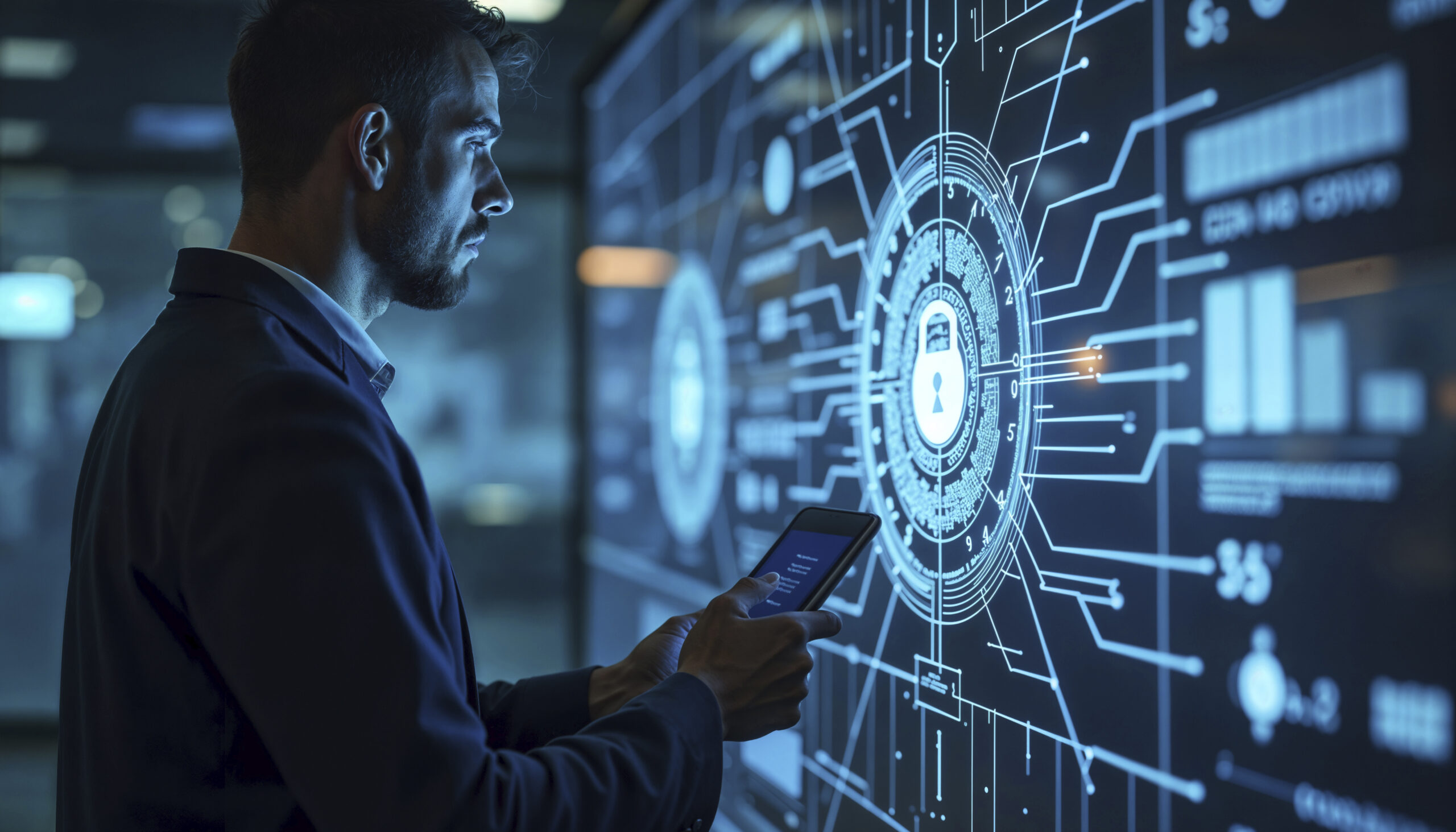
In 2025, artificial intelligence (AI) agents are transforming how US enterprises defend against cyber threats by automating and enhancing cybersecurity measures at an unprecedented scale. As cyberattacks multiply in complexity and volume, AI agents—autonomous systems capable of learning, reasoning, and acting in real time—are essential tools helping businesses reduce risk, increase operational efficiency, and protect sensitive data.
Thank you for reading this post, don't forget to subscribe!This article explores five key ways AI agents are automating cybersecurity in US enterprises, highlighting their impact on security operations centers (SOCs), threat detection, and incident response.
1. Intelligent Threat Detection and Prioritization
AI agents empower enterprises to automatically analyze vast quantities of security alerts with unparalleled speed and accuracy. They distinguish genuine threats from false positives by correlating data across multiple sources including logs, threat intelligence feeds, and behavioral analytics. This noise reduction frees security analysts from the overwhelming volume of irrelevant alerts and enables them to focus on the highest-priority risks.
By continuously learning from new threat patterns and feedback, AI agents refine their detection capabilities to identify even subtle or novel attacks such as advanced persistent threats (APTs).
2. Automated Incident Investigation and Response
Modern AI agents do more than detect threats; many can autonomously investigate potential incidents by gathering evidence, analyzing root causes, and recommending or executing remediation actions. For example, AI systems can isolate compromised accounts, restrict access to sensitive resources, and contain malware spread in real time—actions that previously required human intervention and precious time.
This automation accelerates mean time to respond (MTTR), dramatically reducing the window of opportunity for attackers and minimizing impact on enterprise operations and data security.
3. Continuous Learning and Adaptation
Unlike static rule-based automation, AI agents are built to evolve intelligently. Through continuous learning from historical incidents, analyst input, and evolving threat landscapes, these agents self-improve over time. This adaptive capability ensures that cybersecurity defenses remain effective against new types of attack techniques, tools, and tactics that cybercriminals deploy.
Enterprises benefit from a force multiplier effect where AI agents become more precise and efficient with every cycle of use, driving sustained improvements in security posture.
4. Integration Across Security Ecosystems
AI agents increasingly operate within unified frameworks that span an organization’s entire security ecosystem—including on-premises infrastructure, cloud environments, and endpoint devices.
This holistic visibility allows AI agents to coordinate defenses seamlessly, correlate disparate signals, and provide comprehensive situational awareness. Integration with broader IT and security tools such as Security Orchestration, Automation, and Response (SOAR) platforms further amplifies their impact by automating cross-functional workflows and providing cohesive, real-time defense strategies.
5. Enhancing Cybersecurity Workforce Efficiency
The surge in cyber threats along with a shortage of skilled security professionals has created immense pressure on US enterprise security teams. AI agents alleviate this burden by automating routine and repetitive tasks such as log analysis, alert triage, and compliance reporting.
This shift enables human experts to dedicate their expertise to complex investigations, strategic planning, and innovation. By extending the capabilities of security teams rather than replacing them, AI agents foster a collaborative environment that enhances overall effectiveness and resilience.
Conclusion
In conclusion, AI agents represent a pivotal advancement in cybersecurity for US enterprises in 2025. Their ability to autonomously detect, investigate, and respond to threats while continuously adapting to emerging risks is reshaping the security landscape.
Organizations leveraging these intelligent systems gain faster, more accurate threat handling, operational cost savings, and stronger defenses against increasingly sophisticated cyberattacks.
The integration of AI agents into cybersecurity operations is not only a technological upgrade but a strategic imperative for enterprises aiming to protect critical assets and maintain trust in an evolving digital world.
Frequently Asked Questions (FAQ's)
AI agents are autonomous software systems that use machine learning to detect threats, analyze data, and respond to incidents in real time, enhancing enterprise defenses beyond traditional tools.
They correlate data from logs, behavioral analytics, and threat feeds to prioritize genuine risks, cutting alert noise by up to 90% and freeing analysts for critical tasks.
Yes, they investigate root causes, isolate compromised systems, block malware, and execute playbooks autonomously, slashing mean time to respond significantly.
Agents evolve by analyzing past incidents and new threats, adapting to novel attacks like zero-days through feedback loops and predictive analytics.
By automating routine tasks like triage and reporting, they boost team efficiency, allowing experts to focus on strategy while handling high-volume alerts.