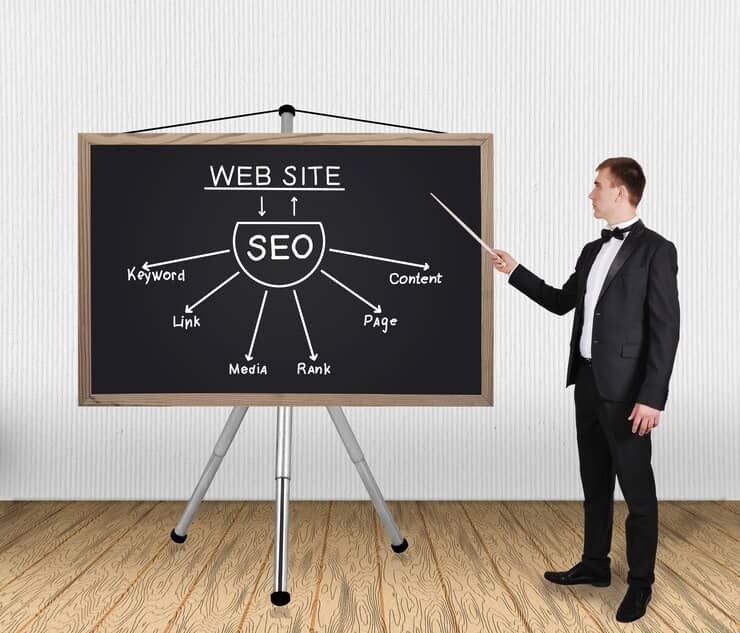
On-page SEO is the practice of optimizing all areas of a website (the content itself) to improve its visibility on search engines and show users what a site has to offer. Off-page SEO deals with off-site signals that help establish authority (and trust) via backlinks to your site from other sites and brand mentions. For sustained rankings in tier-1 markets, Task Web Tech must implement a more balanced approach; on-page as the core, off-page as the foundation to establish the company’s authority in tier-1 markets over time with ongoing efforts.
Thank you for reading this post, don't forget to subscribe!What exactly is on-page SEO?
On-Page SEO refers to all the ways in which you optimize your webpages to help your website improve in relevance, usability, and crawlability. Examples of on-page SEO are content quality, placement of keywords, meta tags, internal links, URL structure, and technical components like mobile responsiveness and page speed.
At Task Web Tech, the overall on-page SEO implementation should allow each article to meet an intent that is easy to access by the user, load quickly from anywhere in the world and provide a good overall reading experience whether on a desktop or mobile device. This should also provide the minimum baseline signal to search engines that your blog has potential to rank ahead of other blogs using competitive technology and marketing-focused keywords in tier 1 countries.
What Does Off-Page SEO Really Mean?
Off-Page SEO is anything that happens outside of your website that affects how search engines and users view your authority, credibility and popularity. Off-Page SEO consists of many factors, but the highest quality backlinks and digital PR, are the two core components. Other things that can happen outside of your website that can improve the Off Page SEO of a website include mentions of the business name by others, Social Media Signals and Collaborations with other bloggers either via guest blogging or influencer features.
If we are talking about a brand such as Task Web Tech, Off-Page Signals are the signals sent to Google by other highly respected domains within the marketing, SaaS and tech industry referring to and trusting the content you’ve created. The higher and more relevant the quality of backlinks you have, the more your Domain Authority will increase, creating a competitive advantage for you in Tier 1 SERPS which are more commonly referred to as mature search engines.
The Two Pillars of SEO: On- Page Vs Off- Page
The two pillars of SEO have fundamentally different functions, yet are critical for a successful SEO strategy. The first pillar of on-page SEO is all about improving your own site and its content. Conversely, the second pillar of off-page SEO involves gaining authority, reputability and establishing relationships with other sites and sources that influence your business.
| Aspect | On-Page SEO (Your Site) | Off-Page SEO (Beyond Site) |
|---|---|---|
| Main focus | Relevance, structure, UX, technical health | Authority, trust, popularity |
| Control | Fully under your control | Indirect; reliant on other sites and audiences |
| Core activities | Content optimization, meta tags, internal links | Link building, PR, brand mentions, social sharing |
| Primary goal | Help bots understand and index your pages | Prove your site deserves to outrank competitors |
| Time to impact | Often visible within weeks | Often slower; months to build strong profile |
Importance of Implementing/Task Web Tech
For a Tech and Digital Marketing Blog for Tier-1 Audiences, On-Page SEO must show true experience and expertise for every URL that you provide to your audience. On-Page SEO should include actionable tested experiences and knowledge that you have learned from using tools, techniques, and the Framework(s) you currently use in the work you perform today.
- Essential On Site Actions For Success:
- Create focused content with clear intent.
- Map out your articles with one primary question and two or three related subtopics to eliminate thin content.
- Include H1, H2, and H3 headings to relate to users’ searches as well as to structure your article around questions and answers.
- Optimize content depth and readability
- Provide comprehensive, original explanations backed by real use cases, screenshots, or anonymized campaign learnings where possible.
- Use short paragraphs, scannable subheadings, and bullet points to improve dwell time and reduce bounce rates on mobile.
- Enhancement of Technical and Semantic Signals
- Page Speed on a Global Basis; Image-heavy Resources and Guide Reviews need to load quickly.
- Providing clean URLs, descriptive meta titles/descriptions; Linking to Related Guides and Implementing the Appropriate Schema Types e.g. (Article, FAQ).
- Create focused content with clear intent.
Tier-1 Market Priorities for Off-Page SEO
Task Web Tech should focus on establishing its reputation on a global scale by creating high-quality relationships with industry publications and blogs, rather than trying to create as many links as possible.
- Off-page actions that can have significant effects:
- Strategies for linking to others on the Internet – An Example would be
- Using well-respected sites that reach large audiences in the US, UK Canada Australia with respect to guest posts or Expert Contribution opportunities
- Also, creating assets that can be used by others will provide valuable backlinks to your blog or web site through References when included in another blog post or piece of written material; Examples would be creating Checklists (Working Examples) and Comparison Studies.
- Building an author/brand for yourself
- Have an author bio with consistent content across multiple channels and platforms that clearly express your years of experience in SEO/content strategy and which supports E-E-A-T (expertise, experience, authoritativeness, trustworthiness) across all channels/platforms.
- Get involved with podcasts, webinars, and Twitter/LinkedIn conversations in which you can share citations and links to your articles to create additional backlinks.
- Reputation and social validation
- Solicit mentions and backlinks from tools that you either utilize or review, e.g.; SEO suites, Content Automation Tools, etc., and when they provide Community Case Studies.
- Enable new posts to be shared on social channels to gather genuine backlinks; nevertheless, social signals should be treated as a separate, albeit indirect, ranking factor.
- Strategies for linking to others on the Internet – An Example would be