Introduction
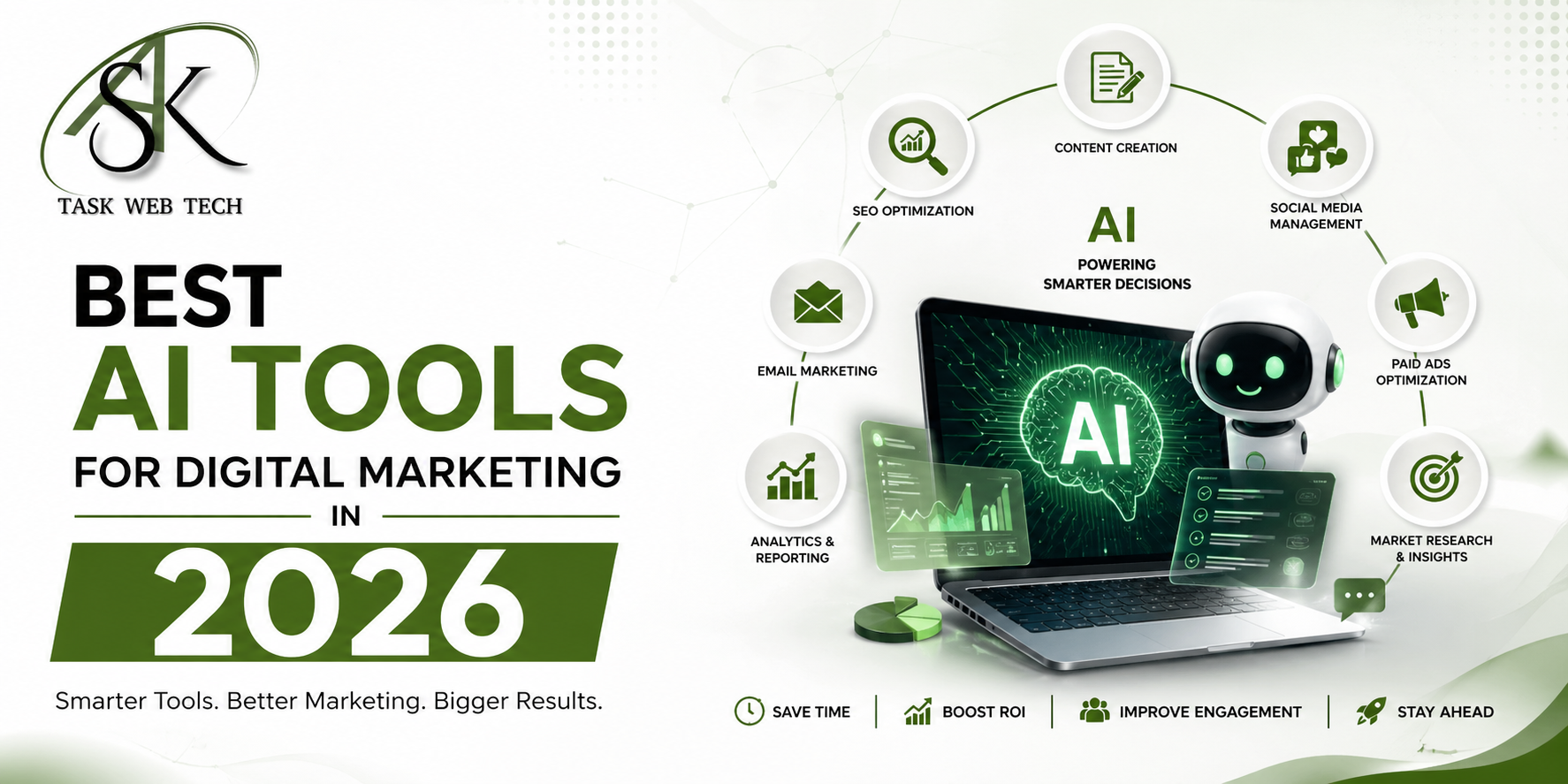
Artificial intelligence has profoundly changed the way marketers handle customer engagement, data analysis, and content development. In 2026, AI is no longer a luxury; it is a strategic requirement for enterprises competing in global tier-1 markets. AI-powered products are already an essential part of modern digital marketing ecosystems, ranging from customer relationship management to predictive analytics.
Thank you for reading this post, don't forget to subscribe!This thorough book delves into the most innovative and effective AI Tools Marketing redefining digital marketing tactics for firms in the United States, Europe, Canada, Australia, and other developed markets. Whether you’re optimising marketing campaigns, creating intriguing content, or personalising consumer experiences, these tools provide practical solutions based on real-world results.
1. HubSpot with AI Assistant-Unified Marketing Automation
HubSpot’s integrated AI assistant has changed the way marketing teams manage client connections and automate tasks. The platform integrates customer data management, email marketing, lead scoring, and analytics, all of which are backed by machine learning algorithms that identify high-converting prospects.
What distinguishes HubSpot in 2026 is its predictive analytics capacity, which examines past customer behaviour to determine future engagement patterns. Marketing teams use this to improve email delivery speeds, personalise content recommendations, and better allocate budgets. HubSpot is an authoritative choice for tier-1 markets because to its multilingual support and compliance with GDPR and CCPA standards.
2. ChatGPT Enterprise for Content Marketing: Advanced Language Generation.
OpenAI’s ChatGPT Enterprise has become a vital tool for large-scale content development. Unlike free alternatives, the enterprise version has dedicated infrastructure, comprehensive API access, and additional security features necessary for large-scale marketing activities.
ChatGPT Enterprise is used by marketing teams to create blog posts, social media captions, email campaigns, and product descriptions that are consistent with the brand. The tool excels in creating SEO-optimized headlines, developing multiple content perspectives for A/B testing, and adapting messaging to different cultural situations.
Its capacity to comprehend sophisticated marketing briefs and generate context-aware content on an enterprise scale solves one of the most time-consuming parts of current digital marketing.
3. Jasper: AI-Powered Content Creation Platform
Jasper is designed specifically for marketing organisations that want to generate content quickly and consistently. The platform specialises in developing marketing copy, ad versions, long-form articles, and social media posts that are SEO optimised and consistent with the brand’s voice.
Jasper provides templates for over 50 marketing use cases, allowing non-technical users to swiftly build campaign assets. The platform’s knowledge integration enables teams to fine-tune outputs based on unique brand guidelines, assuring authenticity and compliance with organisational standards. For agencies managing many client accounts, Jasper’s collaboration features and brand management tools drastically cut content production timeframes while maintaining the quality standards needed in professional tier 1 markets.
4. Adobe Firefly with Generative Fill: Visual Content Innovation
Adobe Firefly represents a significant transformation in the way marketing teams develop visual assets. This generative AI tool, which is integrated into Creative Cloud, produces, modifies, and enriches images, graphics, and design elements without the need for substantial design experience.
Marketers use Firefly to remove backgrounds, expand images, insert objects, and apply styles, all of which used to require hours of human work. Firefly allows social media managers, e-commerce teams, and creative departments to produce assets more faster while keeping professional quality. The tool’s mastery of design concepts ensures that the graphics produced fit the contemporary aesthetic standards required by tier-1 markets.
5. BrandWatch: AI-Powered Consumer Intelligence
Brandwatch uses AI and sentiment analysis to track customer conversations across digital media. The software generates actionable market insight by analysing millions of social media posts, reviews, and mentions.
Brandwatch is used by marketing strategists to spot emerging trends, track competitor positioning, assess brand perception, and anticipate possible reputation concerns before they become major issues. The platform’s AI-driven sentiment analysis recognises context, irony, and cultural nuances, which is crucial for international firms operating in several countries. Real-time notifications allow organisations to respond quickly to market opportunities or crises, establishing a responsive and customer-centric reputation.
6. Seventh Sense: AI-powered email optimisation
Timing and personalisation are critical components of email marketing efficacy, both of which Seventh Sense excels at. This AI solution examines individual recipient behaviour patterns to determine the best send timings, hence increasing open rates and engagement metrics.
Seventh Sense sends emails exactly when people are most likely to open and interact with content, based on when each subscriber actively engages. The technology connects effortlessly with major email platforms and CRM systems, eliminating ineffective one-size-fits-all send schedules. This personalisation strategy dramatically enhances the ROI on email marketing spending for organisations that manage massive subscriber datasets across geographies.
7. Semrush: AI-Powered SEO and Content Strategy
Semrush has grown into a comprehensive AI-powered marketing suite that covers keyword research, competitive analysis, content optimisation, and technical SEO. The platform’s artificial intelligence capabilities understand search intent and make data-driven recommendations for content strategy optimisation.
Content teams use Semrush’s subject research capability to find high-impact content possibilities, and AI-powered SEO recommendations assist on-page optimisation. The platform’s content template engine, which has been strengthened by machine learning, assists teams in creating pieces that are consistent with top-performing competitors. Semrush offers many languages and localisation needs, which are critical for tier-1 market penetration in international SEO.
8. Phrasee: AI Language Optimisation
Phrasee specialises in optimising marketing language across all channels with proprietary AI models trained on performance data from billions of marketing interactions. The technology creates subject lines, calls to action, and email content variations based on expected performance scores.
Instead of depending on intuition or manual testing, Phrasee makes data-driven linguistic recommendations. Phrasee is used by retail brands, e-commerce platforms, and service providers to significantly increase email click-through rates and conversion metrics. The platform’s emphasis on language complexity and contextual awareness makes it especially useful for firms serving several English-speaking areas with diverse cultural expectations.
Conclusion
AI Tools altering Digital Marketing in 2026 are true technological breakthroughs, not incremental gains. From content development and email optimisation to graphic asset creation and consumer information, these tools allow marketing teams to function more efficiently while retaining human creativity and strategic insight.
Adoption of these AI Tools Marketing is critical for organisations competing in tier-1 markets in order to remain competitive. Success necessitates not only the implementation of technology, but also the development of knowledge in how to use AI Tools Marketing to boost human creativity, make data-driven decisions, and deliver personalised experiences on a large scale.
The future of digital marketing belongs to organisations that carefully integrate AI into their workflows—and that future is today.