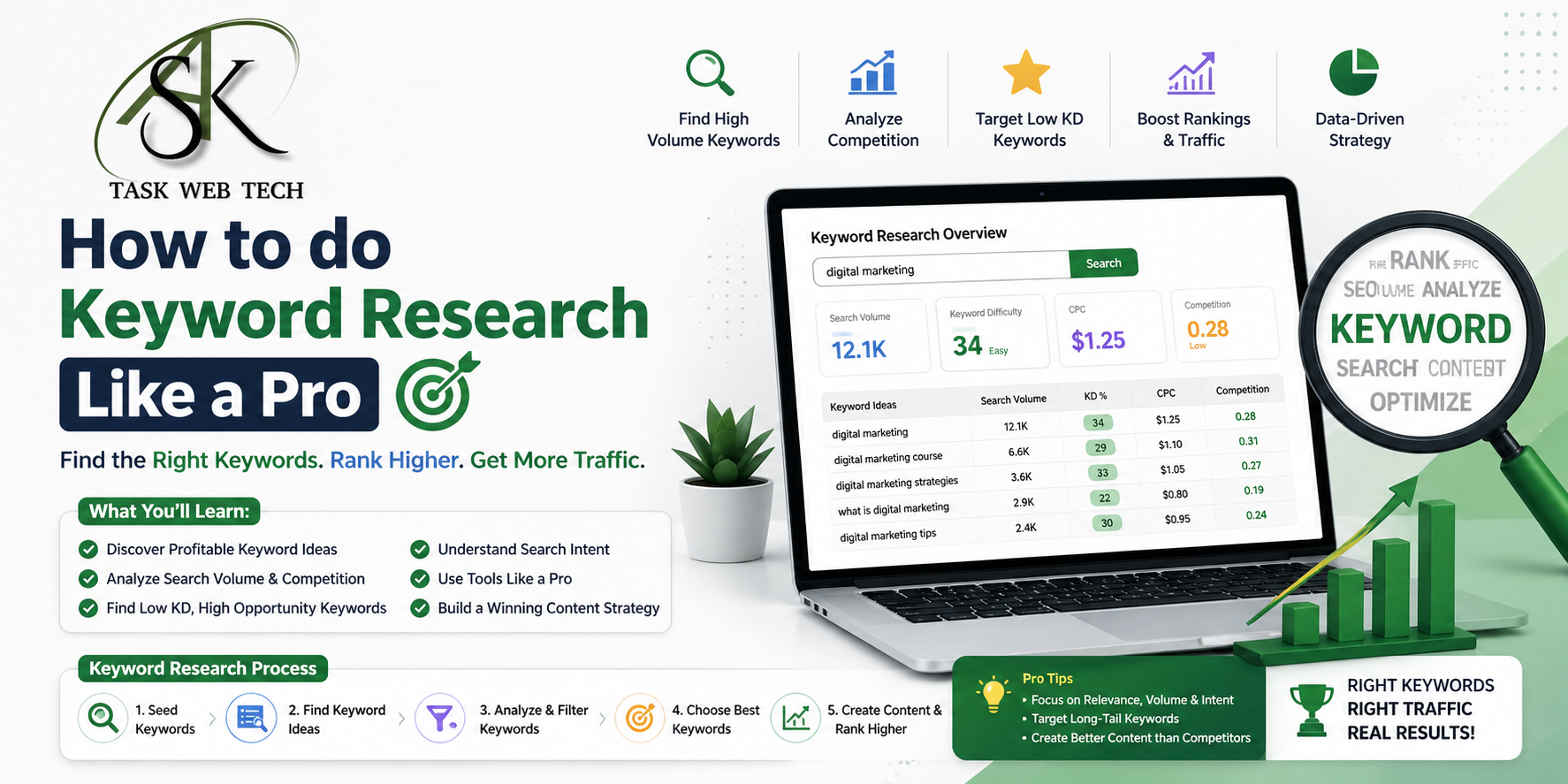
Keyword research is a critical component of successful digital marketing, and understanding it may significantly improve your online visibility, traffic, and, eventually, business growth. Understanding how to conduct level of professional keyword research is essential whether you’re starting a new blog, optimising an existing website, or establishing an overall SEO plan. This comprehensive tutorial will help you through the process of selecting, analysing, and utilising keywords like a seasoned pro.
Thank you for reading this post, don't forget to subscribe!Understanding the Basics of Keyword Research
Professional Keyword Research is the process of determining the search phrases that your target audience uses to find products, services, or information about your company. It’s not just about finding random terms; it’s about learning the language your potential clients speak and comprehending their search meaning. When you match your content to these keywords, you create a direct link between what people are looking for and the solutions you provide.
Understanding search volume, keyword difficulty, and user intent is critical for efficient keyword research. Search volume reveals the number of individuals who search for a given phrase on a monthly basis, which can help you estimate potential traffic. Keyword difficulty assesses how difficult it is to rank for a specific keyword, whereas user intent indicates whether someone wants to study, buy, compare, or find local services. Professional keyword researchers constantly strike a balance between these three aspects when identifying possibilities with a high payout and manageable competition.
Utilise Advanced Keyword Research Tools
While manual research has its uses, professional keyword researchers rely on specialised tools that deliver data-driven results. Tools such as SEMrush, Ahrefs, Moz, and Google Search Console provide comprehensive keyword statistics that would be impossible to obtain manually. These tools display keyword variations, search trends, competitive keywords, and extensive difficulty data.
Google Keyword Planner, despite being developed for marketers, is still quite useful for evaluating search volumes and trends. It’s free and connects seamlessly with Google’s data, making it an excellent starting place. For more extensive analysis, paid tools offer competitor analysis, keyword clustering, and long-tail keyword discovery, which might find less obvious but extremely valuable opportunities.
When choosing a tool, think about your budget, technical comfort level, and unique requirements. Many professionals utilise a variety of tools in their research workflow, each providing a unique role. This multi-tool strategy ensures that data is cross-validated and provides complete insights.
Understand long-tail keywords and search intent
While head keywords (short, wide terms such as “SEO”) are appealing due to their huge search volume, they are frequently exceedingly competitive and ambiguous. Professional researchers recognise that long-tail keywords—longer, more specialised phrases—often provide better prospects. A term such as “how to do keyword research for small businesses” receives less searches than “SEO,” but it generates highly quality traffic from people with precise intent.
Search intent is crucial. Your content strategy depends on whether customers want informational content, are ready to make a purchase, want to evaluate possibilities, or are looking for local services. Misaligning material with intent is a typical issue that affects ranking efforts. A person seeking for the “best project management tools” seeks comparison articles rather than a tutorial on how to use a certain application.
Examine the top-ranked pages for your desired keywords. If your competitors are releasing thorough guides, it’s a hint that informational content is what rankings. If product pages dominate, it suggests commercial intent. This competitive analysis identifies the expected content structure and depth needed to rank successfully.
Conduct Thorough Competitor Analysis
Your rivals are treasure troves of keyword knowledge. Examine the keywords rivals rank for, their keyword strategy, and where they are succeeding or failing. Competitor websites may be entered into tools like Ahrefs and SEMrush to learn about their ranking keywords, traffic sources, and backlink profiles.
This competitive intelligence identifies keyword gaps—terms that rivals have not fully optimised yet have a high search volume and relevance to your business. These gaps show areas where you may gain control with little direct competition. Furthermore, examining rival material allows you to determine what is successful in your sector and how you may generate better versions.
Organise and Prioritise your keywords
Once you’ve found possible keywords, organising is critical. Create keyword clusters to arrange relevant phrases together. This technique assists you in understanding topical linkages and developing complete content strategies that handle numerous relevant questions from a single pillar page that is supplemented by cluster content.
Prioritisation entails weighing each term against your company objectives. A keyword with moderate search volume and low difficulty that is directly related to your main offering may be more value than a high-volume phrase that is just marginally related to what you provide. Consider your present domain authority, existing content, and available resources when deciding which keywords to target initially.
Create a keyword priority matrix based on search traffic, term difficulty, relevance, and possible commercial value. This methodical strategy saves time and effort on keywords that will not help you achieve your objectives.
Use seasonal and trend analysis
Successful keyword researchers do not disregard seasonality and patterns. Google Trends shows if keyword interest is rising, falling, or cyclical. Understanding these trends allows you to develop content calendars that capitalise on seasonal peaks and plan for hot subjects before they become popular in search.
Analysing search trends allows you to keep ahead of industry trends and changes in user behaviour. Perhaps searches for “remote work tools” surged during the epidemic but are still greater than they were before. Recognising these adjustments helps you to change your plan proactively rather than reactively.
Develop a Continuous Research Process
Keyword research is not a one-time event; it is a continuing process. Markets adapt, search behaviour shifts, and new rivals arise. Professional researchers use keyword tracking tools, monitor ranking changes, and frequently assess their keyword strategy for relevance and performance.
Set up notifications for new keyword opportunities and check your present rankings on a monthly basis. This constant vigilance guarantees that you remain visible and capitalise on new chances. In addition, use Google Search Console to analyse your actual search traffic statistics to see which terms produce genuine results and tweak your approach as needed.
Conclusion
To master keyword research like an expert, you must first understand the foundations, then utilise relevant tools to analyse user intent, investigate rivals, and maintain continual optimisation. It combines science (using data and metrics) and art (understanding user behaviour and business context). By constantly following these tactics, you’ll get the knowledge necessary to select high-value keywords that attract quality visitors, create authority in your area, and achieve long-term success.
Remember that the aim is more than just ranking for keywords; it’s also about interacting with your target audience while they’re actively looking for answers. Professional keyword research serves as the link between interested searchers and engaged visitors, eventually leading to devoted clients. Begin adopting these methods today and see your internet exposure improve.