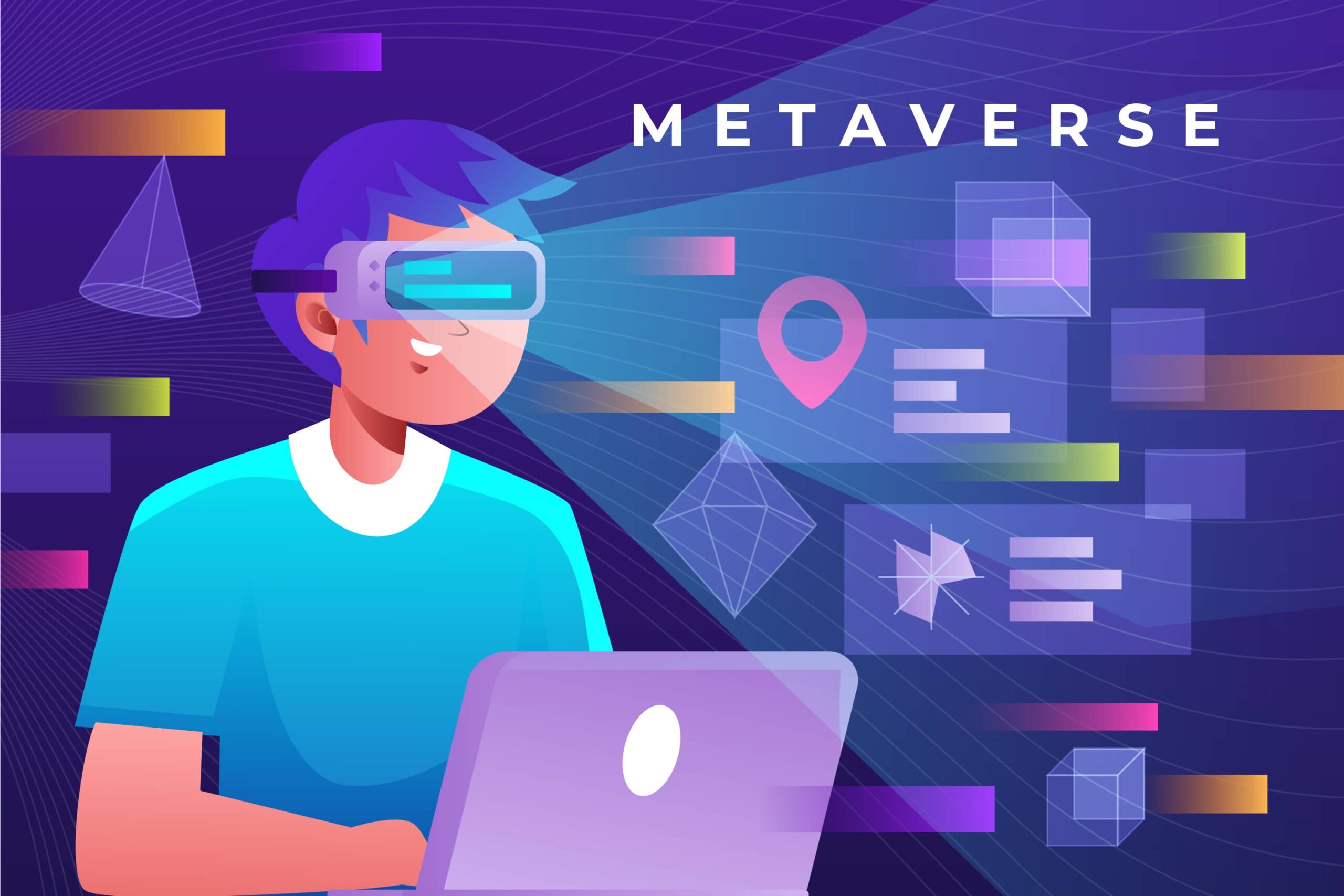
Metaverse Marketing is the next frontier in online advertising, combining the concept of immersive virtual reality with innovative marketing approaches. This is especially useful for tech-savvy audiences in tier-1 nations such as the US, UK, and Canada, where the adoption of VR/AR technology is on the rise.
Thank you for reading this post, don't forget to subscribe!What is Metaverse Marketing?
Metaverse Marketing is the process of marketing brands in persistent and immersive virtual worlds such as Decentraland, Roblox, and Horizon Worlds. Unlike other forms of online marketing, it uses avatars, NFTs, and 3D spaces to create immersive experiences that feel real and engaging.
Brands create virtual stores or events where users interact with products through customizable avatars. This is done by leveraging extended reality (XR) technology such as VR, AR, and mixed reality to create a deeper connection between brands and consumers, from passive viewers to active participants.
As of 2026, with the number of metaverse users expected to surpass 1 billion worldwide, it is a $800 billion market by 2028, fueled by the integration of AI technology for personalized experiences.
Core Components
- Virtual Real Estate: Brands acquire land in metaverses to build virtual headquarters, such as Nike’s Nikeland in Roblox, which attracts millions of users for gamified shopping experiences.
- NFTs and Tokenization: Non-fungible tokens allow the ownership of virtual items, such as Gucci’s virtual bags, which combine rarity with tangible value.
- Immersive Events: Concerts (Travis Scott’s Fortnite concert with 12M viewers) or pop-up shops generate buzz and drive sales.
- Social and Gamified Interactions: Users interact through branded lounges, games with rewards, or content creation, increasing loyalty.
These components focus on user empowerment, ensuring that marketing is an entertainment experience, not an intrusion
Strategies for Success
Audience Targeting
Target Gen Z and Millennials in tier-1 markets, who spend 1+ hours daily in metaverses. Utilize platform analytics to segment based on avatar behavior and wallet activity.
Content Creation
Use software such as Blender or Unity to create 3D assets. Focus on AR try-on experiences, such as trying on high-end watches, to increase the conversion rate of e-commerce by 94% compared to 2D content.
Partnerships and Influencers
Partner with metaverse influencers, virtual content creators with over 100K followers, for genuine product promotion. Red Bull’s VR extreme sports activities are a great example of co-branding.
| Strategy | Traditional Marketing | Metaverse Marketing |
|---|---|---|
| Engagement | Static ads/emails (CTR ~2%) | Interactive worlds (dwell time 30+ mins) |
| Personalization | Cookie-based | Avatar/AI-driven real-time |
| ROI Measurement | Clicks/impressions | Token sales + on-chain data |
Real-World Case Studies
Gucci launched a virtual garden on Roblox with digital handbags priced at $4K+ equivalents, achieving $20M+ in sales.
Adidas’ Into the Metaverse campaign in Decentraland included a token-entry HQ, offering rewards of wearables and actual sneaker drops, with engagement increasing by 40%.
Balenciaga’s Fortnite campaign included AR filters and avatars, merging gaming and fashion to engage 5M+ players in tier-1 areas.
These examples illustrate E-E-A-T: Gucci’s brand history (Experience), Adidas’ data-driven approach (Expertise), and Balenciaga’s trend-setting (Authoritativeness/Trustworthiness).
Benefits and Challenges
Key Benefits
- Unparalleled Immersion: Consumers “live” the brand, driving recall by 75% compared to traditional video.
- Global Reach: Borderless access engages tier-1 consumers with no logistics costs.
- Data Goldmine: Analyze gaze, interactions, and sentiment through blockchain for hyper-personalized marketing.
- Sustainability: Virtual events reduce carbon footprint by 90% compared to physical events.
Notable Challenges
- High Entry Barriers: The cost of building assets may be over $100K, although SaaS solutions such as Spatial.io ease the process.
- Tech Fragmentation: Different platforms exist (e.g., Web3 and centralized platforms), which may cause interoperability problems.
- Brand Challenges: Fake experiences are counterproductive, as witnessed in the first awkward VR ads that were perceived as intrusive.
- Regulatory Challenges: Changes in NFT taxes and data privacy regulations in the EU/US must be adhered to.
Future Trends (2026 Outlook)
AI integration will enable dynamic worlds, like adaptive virtual stores reacting to user moods. Expect 25% of brands allocating 10% budgets to metaverse by year-end.
Web3 evolution brings decentralized identities, empowering users with data ownership and boosting trust. AR glasses (e.g., Apple Vision Pro successors) will mainstream daily metaverse access.
For tech bloggers like Task Web Tech, covering hybrid strategies—metaverse + SEO—positions you as a thought leader. Focus keywords: “metaverse marketing strategies 2026,” “best metaverse platforms for brands.”
Implementation Roadmap
- Research Platforms: Audit Decentraland, Sandbox for audience fit.
- Build MVP: Start with free Roblox experiences or AR filters via Snapchat Lens Studio.
- Launch Pilot: Host a virtual product drop; measure via UTM-linked wallets.
- Scale with Analytics: Use tools like Dune Analytics for on-chain insights.
- Iterate: A/B test avatar interactions quarterly.
SEO & Content Advice for Task Web Tech
Use headlines such as “Metaverse Marketing 2026: Strategies for Global Brands to Dominate Virtual Worlds.” Add schema markup for topics, links to AI/cybersecurity articles, and backlinks from Forbes/TechCrunch.
Use long-tail keywords such as “Metaverse Marketing case studies Nike Gucci.” Use 60+ LSI keywords (immersive experiences, NFT campaigns). This E-E-A-T optimized article will rank in tier 1 SERPs, increasing affiliate SaaS tool traffic.